
CT200 Standard Dust-Free Miter Saw
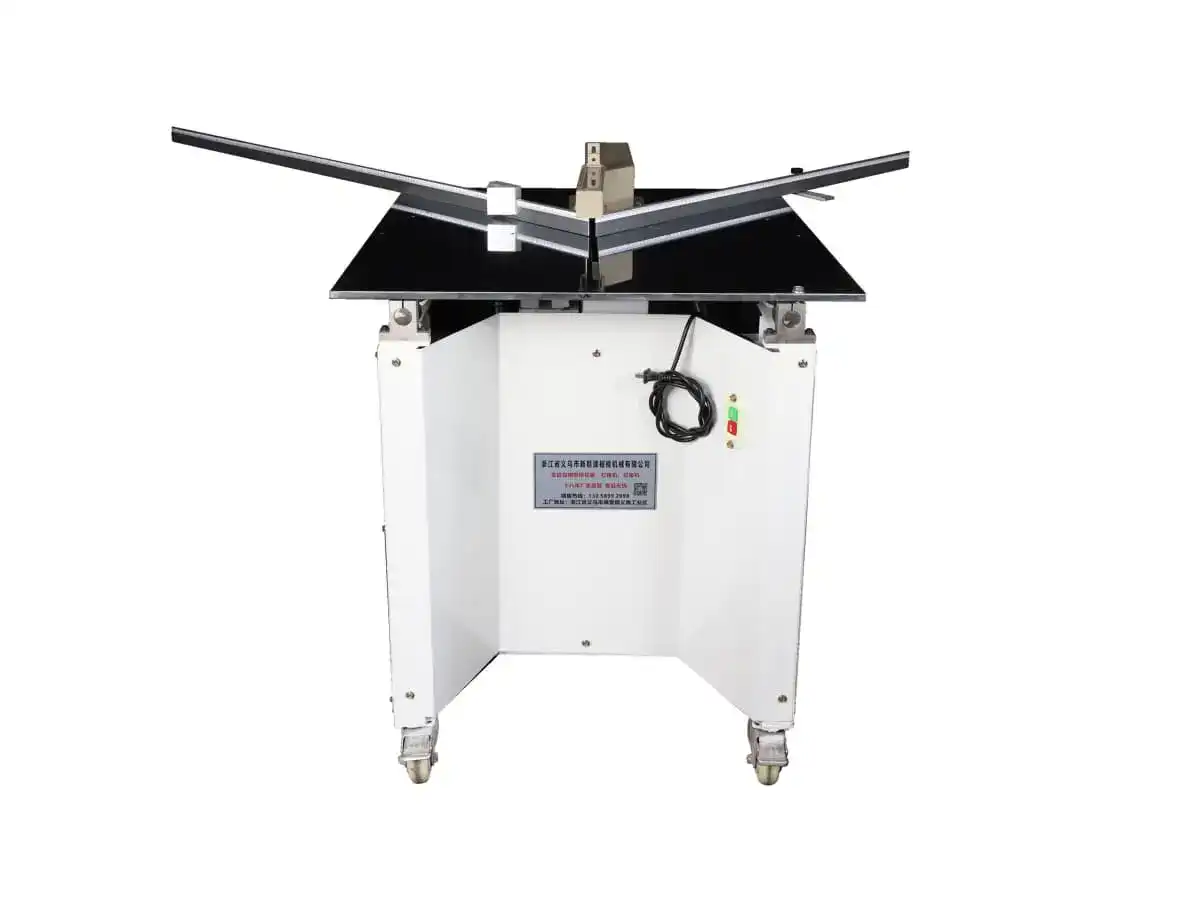
The CT200 is an entry-level dust-free miter saw for new studios and small workshops. It combines a compact footprint with integrated bag-filter dust collection rated at 85%+ capture, making it an economical first step before upgrading to the CT300 moving-table platform. Processing range covers profiles up to 120×80 mm for everyday solid wood, MDF, and foam moulding mitering.
- Integrated bag-filter dust collection improves shop air quality without a separate vacuum system.
- Compact footprint and straightforward setup suit solo studios and limited floor space.
- Economical entry point for dust-free mitering before moving to CT300 production capacity.
- New framing studios
- Small workshops (100–500 frames/day)
- Basic dust-free mitering needs
- Solid wood, MDF, and foam moulding
- First equipment upgrade from manual saws
Architecture: Fixed-blade miter saw with integrated dust extraction
- Moulding is placed and the miter angle is set.
- The operator engages the blade guard and performs the cut.
- Cutting dust is captured through the integrated bag-filter system.
- The finished stick is removed and the next piece is positioned.
| Power | 2.0 kW |
| Voltage | 220V |
| Arbor | 25.4 mm |
| Air Pressure | 6–8 MPa (optional) |
| Processing Range | 120 × 80 mm |
| Dust Collection Rate | 85%+ |
| Net Weight | 110 kg |
| Dimension | CT200 | Moving Table Miter Saw |
|---|---|---|
| Use case | Small studios with basic dust-free mitering needs | Shops prioritizing dust extraction and flexible stack cutting |
| Throughput | Hundreds of frames/day | Operator-paced stack cutting on moving table |
| Automation level | Entry-level manual operation | Fixed blade, moving table (manual/semi-automatic) |
| Recommended daily output | 100–500 frames/day | 500–1,000 frames/day |
How do I choose between the CT200 and CT300?
The CT200 suits hundreds of frames per day on a limited budget; the CT300 offers stronger dust collection and a larger working range for steady daily production.
Does it include dust collection?
Yes—a standard bag filter system captures cutting dust and improves shop air quality.
Which materials is it best for?
Everyday mitering of common solid wood, MDF, and foam moulding. For complex profiles and larger sizes, upgrade to the CT300.
What daily output is realistic on a CT200?
Most starter shops run 100–500 frames per day depending on moulding mix, operator rhythm, and order complexity. The CT200 is sized for that entry band—not high-volume automated lines.
What equipment typically follows the CT200 in a workflow?
Common pairings include NN400 or NN600 underpinners for wood frame joining, or MM100 for glue-assisted assembly on small frames before underpinning.
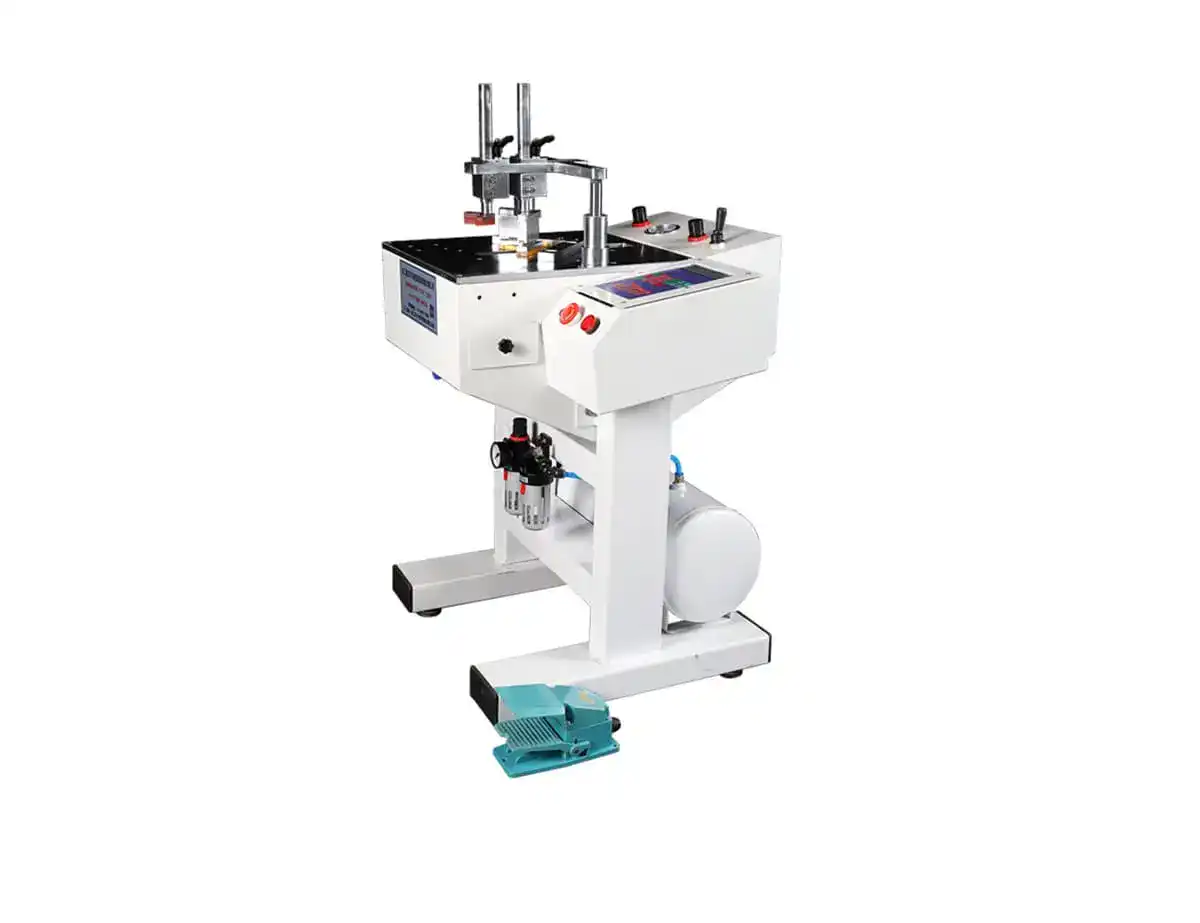
PLC Active Compression Underpinner
Upgrade to the N400 Active Clamping Underpinner. Features smart pressure adjustment and multi-material V-nailer compatibility for perfect corners.
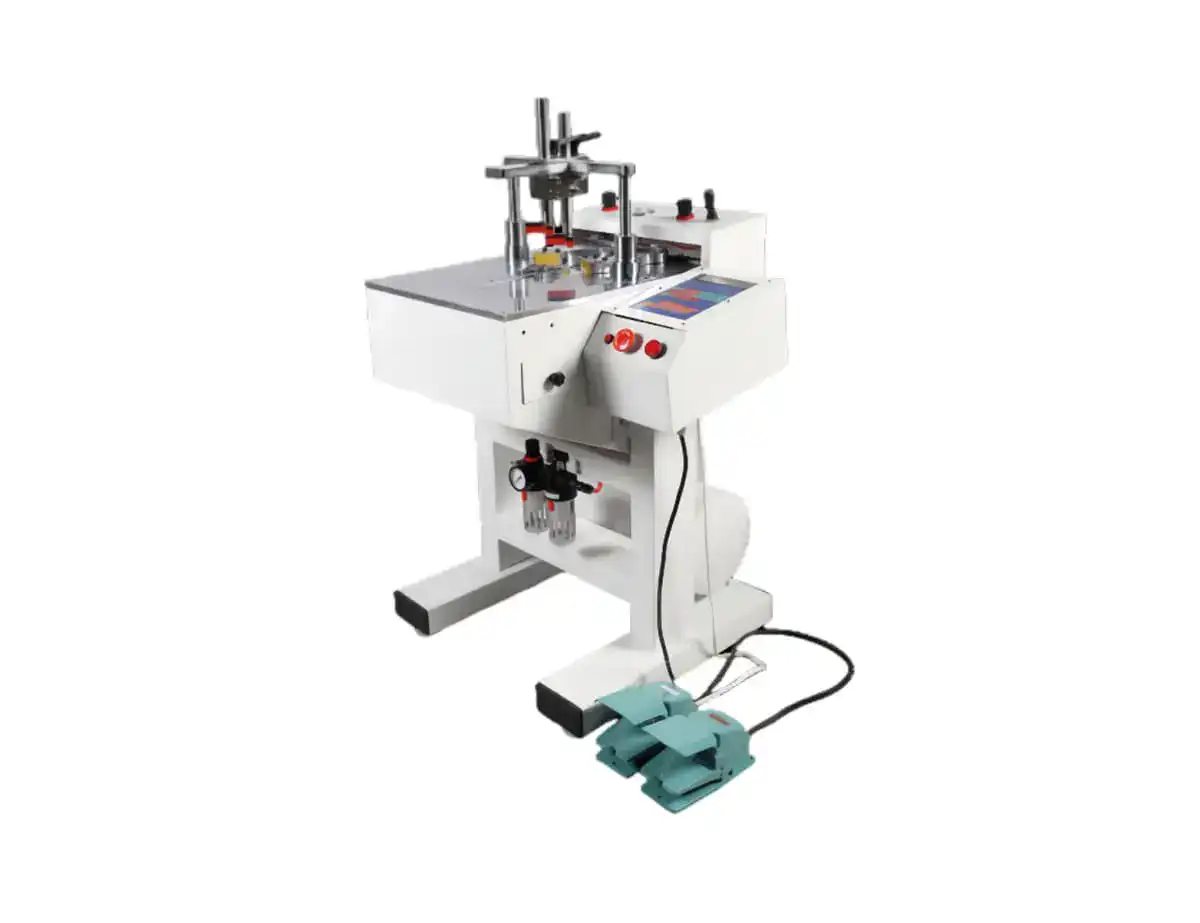
MDF Protection Underpinner
NN600 CNC Underpinner offers advanced plate clamping technology. Ensure zero-gap joining for photo frames with this heavy-duty V-nailer machine.
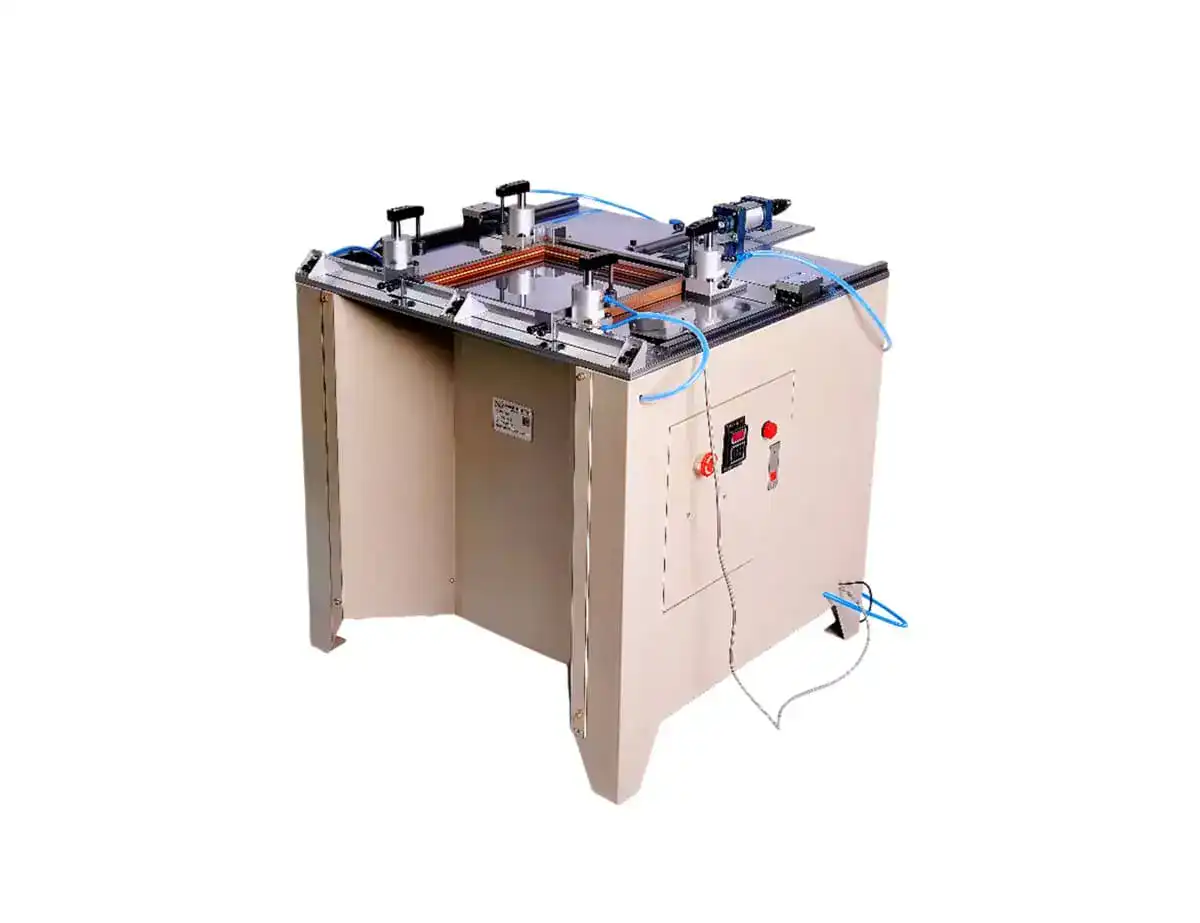
Glue-Assisted Frame Assembly Press
The MM100 is a pneumatic frame assembly machine with quad-directional clamping. Ideal for gluing and joining wooden picture frames without nails.
PLC Active Compression Underpinner
Upgrade to the N400 Active Clamping Underpinner. Features smart pressure adjustment and multi-material V-nailer compatibility for perfect corners.
MDF Protection Underpinner
NN600 CNC Underpinner offers advanced plate clamping technology. Ensure zero-gap joining for photo frames with this heavy-duty V-nailer machine.
Glue-Assisted Frame Assembly Press
The MM100 is a pneumatic frame assembly machine with quad-directional clamping. Ideal for gluing and joining wooden picture frames without nails.
Need 1,000+ frames/day with stronger dust collection and wing tables? Studio Solutions →
Not sure where to start?
Next steps
Ready to buy
Get custom quote within 2 hoursPrefer chat? WhatsApp sales